
In short
ABA (Applied Behaviour Analysis) is an evidence-based way of teaching skills, built around how each child learns. Sessions mix play, structured teaching and everyday routines, and goals are set with your family. A Clinical Supervisor designs and oversees the program, and an Instructor Therapist works with your child in sessions. Modern ABA is play-based, centred on your child, and built on their consent and participation.
- Play-based and child-centred
- No diagnosis needed
- Goals set with your family
- Clinical Supervisor plus Instructor Therapist
What is ABA therapy?
ABA stands for Applied Behaviour Analysis. It is an evidence-based approach that focuses on understanding behaviour and teaching skills in the context of everyday environments.
ABA is most often used with children and teens with autism and other developmental disabilities. You don’t need a diagnosis to start ABA at AlphaBee.
ABA examines the events that occur before a behaviour (the antecedent) and after a behaviour (the consequence) to identify patterns. It helps children build functional skills, strengthens helpful behaviours and teaches alternatives to interfering behaviours that get in the way of learning new skills or taking part in the community.
In simple terms, behaviours that are reinforced are more likely to happen again, while behaviours that are not reinforced are less likely to.
What does a session actually look like?
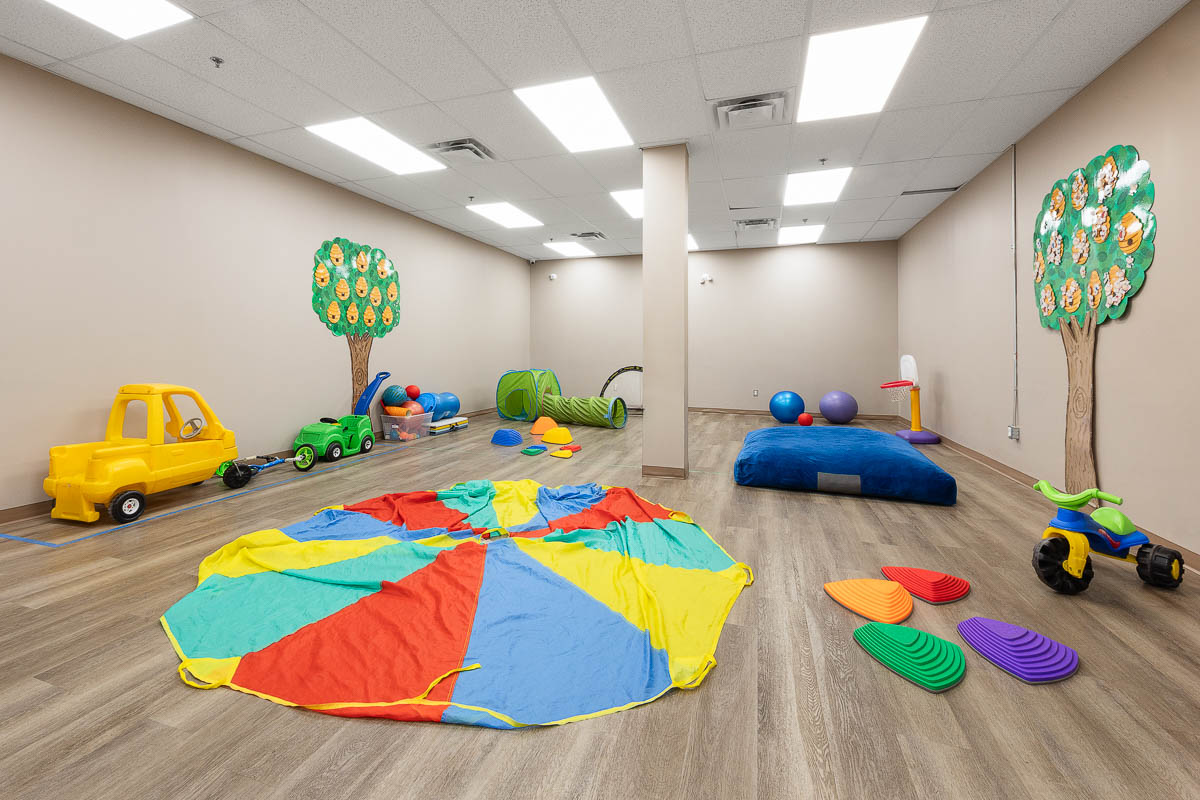
A session mixes guided play, structured learning and daily routines.
When your child begins ABA therapy, their Clinical Supervisor conducts an assessment to evaluate current skills and develop specific treatment goals. Once the assessment is complete, individualized programs are created for your child.
We draw from a range of established assessment tools to understand your child’s current skills, strengths and areas for growth. Depending on their age, needs and goals, this may include tools such as the VB-MAPP, EBIC, AFLS, EFL or ESDM. The goal isn’t simply to produce a score — it’s to build a meaningful starting point for individualized programming and measuring progress over time.
A typical session includes:
- Pairing and rapport building: at the beginning of each session, the Instructor Therapist focuses heavily on building a positive relationship with your child. This helps establish trust, motivation and engagement.
- Incidental Teaching or Natural Environment Teaching (NET): NET involves teaching skills in the setting where your child is most likely to use them. The Instructor Therapist follows your child’s lead and creates in-the-moment learning opportunities during activities such as mealtime and play. This helps your child use skills in new places and with new people (generalization).
- Structured instruction: the Instructor Therapist will use techniques such as discrete trial training, which breaks larger skills into smaller, more manageable steps. Your child practices these skills through repetition and positive reinforcement.
What does ABA work on?
ABA can work on almost any skill that matters in your child’s daily life.
Treatment goals may address many different areas, including:
- Functional communication: teaching children to ask for preferred items and activities using words, signs, and/or their communication devices.
- Expressive and receptive language: building communication skills such as using words or signs to ask and answer questions as well as understanding and following instructions.
- Social skills: developing skills such as sharing attention with others, turn taking, shared facial expressions and other skills that support building and maintaining friendships.
- Play and leisure skills: teaching children how to play with toys functionally and engage independently during free time.
- Self-care routines: building independence with everyday tasks such as dressing, brushing teeth, eating and toileting.
- Motor skills: supporting the use of large and small muscle groups to improve coordination, balance and movement.
- School readiness and academic skills: strengthening skills needed to participate in classroom routines including focus, attention, reading, writing and math.
- Emotional regulation: teaching children to name emotions and use coping strategies.
- Replacement skills: teaching other ways to get needs met, such as functional communication and coping when a preferred item or activity isn’t available right away.
This list is not exhaustive; it provides examples of some skills that ABA may address. If you have specific goals for your child, please speak with their Clinical Supervisor.
Who delivers it?
At AlphaBee, every child has a Clinical Supervisor and one or more Instructor Therapists.
ABA providers vary in their training, experience and certifications.
The Instructor Therapist holds a college diploma or university degree in a related field such as Behavioural Science, Psychology, Child and Youth Care, Social Work or Early Childhood Education along with a graduate certificate in Autism and Behavioural Science. These trained professionals work directly with your child each day, implementing individualized strategies and protocols.
The Clinical Supervisor is a trained professional and a Registered Behaviour Analyst (RBA) in Ontario. They oversee ABA programs, guide front-line therapists, monitor your child’s progress and meet with families to discuss treatment goals.
How is modern ABA different from what you may have read?
Modern ABA is play-based, centred on your child, and built around their consent and participation.
Modern ABA differs from traditional methods because it uses a compassionate, client-centred approach to care that connects with the learner on an interpersonal and emotional level. It prioritizes the learner’s safety while respecting their needs, preferences and autonomy.
Modern ABA involves collaboration with families. It involves the learners and their families in developing individualized treatment goals and obtaining consent and assent (a child’s own willingness to take part), when appropriate.
Additionally, modern ABA uses a play-based learning style and teaches skills in the natural environment, with structured table-top teaching used where it helps. It recognizes that people with autism do not need to be “cured”; rather, they benefit from additional support in developing skills that matter in everyday life.
| Category | Modern ABA | Traditional ABA |
|---|---|---|
| Philosophy and values | Uses a client-centred approach that involves clients and families in goal setting | Used a therapist-directed approach |
| Area of focus | Focuses on increasing functional communication, emotional regulation and improving the learner’s quality of life | Focused on reducing interfering behaviours, including stimming, and increasing compliance |
| Teaching environment | Uses Natural Environment Teaching (NET), play-based learning and discrete trial training | Relied heavily on repetitive table-top learning |
| Consent and participation | Practices assent-based care. Therapists monitor the learner’s willingness to participate and respond to behaviours that indicate reluctance or withdrawal | Often prioritized compliance with instructions even when learners showed signs of withdrawal |
What do adults with autism say about ABA?
Views are mixed, and we listen to all of them.
Some adults with autism describe ABA as helpful when it supports meaningful goals such as communication, safety, emotional regulation and independence. Others report harmful experiences, particularly with traditional ABA approaches.
For example, some adults with autism have commented on the traditional ABA approach focusing on compliance and discouraging stereotypy (repetitive movements or sounds, often called stimming). Additionally, there was criticism that traditional ABA did not respect a learner’s boundaries.
A common message from adults with autism is that ABA should be individualized, affirm neurodiversity and focus on improving quality of life. The goal should not be to make the learner look less autistic. They strongly emphasize the importance of consent and assent, respectful communication and collaboration — key features of modern ABA.
What does the evidence say?
The evidence suggests that ABA is an effective intervention for building skills such as language development, social interactions and self-help routines.
It can also reduce interfering behaviours by using positive reinforcement and teaching replacement skills.
How many hours does my child need?
It depends on your child.
Children typically receive between 10 and 40 hours of ABA therapy per week, depending on their age, goals and individual support needs. ABA therapy is not a one-size-fits-all approach. Following the initial assessment, your Clinical Supervisor will recommend an appropriate number of therapy hours based on your child’s strengths, needs and areas requiring support.
ABA treatment plans are usually described as focused or comprehensive.
- Focused ABA: ranges between 10 to 25 hours per week and may be recommended when the child has a limited number of specific goals and few or no interfering behaviours.
- Comprehensive ABA: ranges between 26 to 40 hours per week and may be recommended for younger children or for children who require support across many developmental areas such as language, self-help, social, play, motor, math, writing and reading.
Is ABA the only option?
No. ABA is one option.
Other services that you may be interested in exploring include:
- Speech-Language Therapy (SLP): supports communication skills including signs and augmentative and alternative communication (AAC) devices.
- Occupational Therapy (OT): focuses on daily living skills such as dressing or eating and incorporates sensory techniques to help manage sensitivities to sound or movement.
- Social Skills Groups: teaches children the skills needed to build and maintain friendships.
- Caregiver Coaching: trained professionals collaborate with parents to help them implement strategies in natural settings.
- Entry to School Program: six-month group program designed to help children transition to kindergarten or school.
- Caregiver-Mediated Early Years Program (CMEY): free, play-based development program for caregivers of children between the ages of 12 and 48 months. AlphaBee runs this with SAAAC Autism Centre.
- Urgent Response Services: time-limited crisis intervention for children and youth when interfering behaviours put their safety, or their family’s safety, at risk.
How do I know if it’s working?
You should see your child communicating more, doing more for themselves, and using new skills outside sessions.
Key signs of progress include improved communication, increased independence and fewer or less intense interfering behaviours.
For example, your child may ask for their preferred items and activities using words, signs or their communication device. Meltdowns may happen less often or be less intense. Additionally, your child should start demonstrating the skills outside of therapy — at home, school, in the community and with different people.
Your Clinical Supervisor tracks progress throughout sessions and goes through it with you in a report after the first 30 days, then every 6 months.
When should I ask for help?
It’s worth reaching out if:
- You have questions about your child’s communication, play or daily routines.
- You’re considering ABA and want to know whether it’s a good fit for your child.
- You’re waiting for an assessment and want support in the meantime.
- You’ve read mixed things about ABA and want to ask how we work.
At AlphaBee, a Clinical Supervisor assesses your child and plans their goals with you. An Instructor Therapist works with your child in sessions.